
Family stories
A Gift for Parents Who Have Everything: Give Their Stories Somewhere to Go
A gift guide for parents who have everything, organized by the emotional job each idea performs — not another object competing for shelf space.
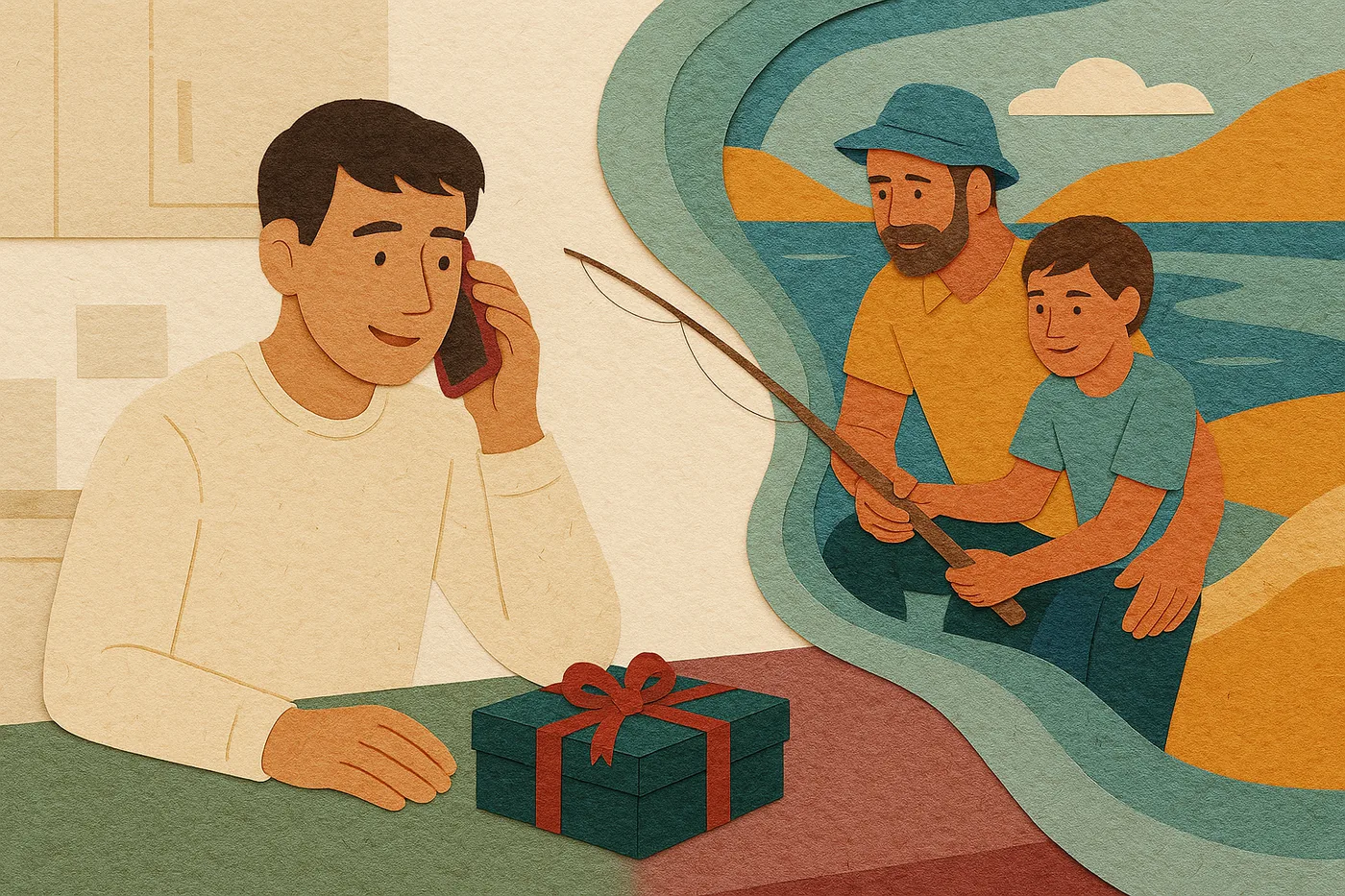
Every year the search for a gift for parents who have everything runs into the same problem: they do not need another object. The closets are full, the shelves are full, and anything that arrives shrink-wrapped just becomes one more thing to find room for. The gifts that actually get used and remembered are not things at all — they do a job the house does not already do.
A gift for parents who have everything works when it performs one of three jobs a full house cannot: it removes clutter instead of adding it, it creates an experience instead of an object, or it gives something a parent already has — their stories, their opinions, their memory of a life nobody else lived — somewhere to go. Sort any idea against those three before buying it.
Why "what do you get someone who has everything" is the wrong question
Framed as a shopping problem, the search for a gift for parents who have everything always ends the same way: another candle, another gadget, another thing that gets a polite reaction and then a drawer. The problem is not that nothing good exists. It is that "everything" describes objects, and objects are the one category a full house genuinely does not need more of.
A better question is what a parent has that nobody has asked about directly. Most people who "have everything" still have an unrecorded version of how they got it — the choices, the near-misses, the people who are not around to ask anymore. That is not a shelf problem. It does not compete with anything already in the house.
Non-clutter gifts, sorted by the job they do
Three categories consistently avoid the shelf problem, because none of them adds an object that has to be stored, dusted, or eventually thrown away.
Consumable and experience gifts. A meal out, a weekend away, tickets to something they would not buy for themselves, a class in something they have mentioned wanting to try. These leave a memory instead of an object, which is exactly what a full house is missing room for.
Time and effort gifts. A standing arrangement to handle something tedious — yard work, a recurring errand, help with paperwork — gives back hours instead of adding clutter. It is a quieter gift than an experience, and it is often the one that gets used the most, because it keeps paying off long after the wrapping paper is gone.
Attention gifts. Being asked genuine questions about their own life, and being listened to, is a gift some families overlook because it does not arrive in a box. For a parent whose accomplishments, opinions, and history nobody has asked about directly in years, it can matter more than anything that does.
None of these three outranks the others. A parent who is private, or who would rather spend an afternoon on a trip than a conversation, is better served by the first category. The point of sorting by job is finding the one that fits this parent, not defaulting to whichever is fashionable this year.
What "give their stories somewhere to go" actually means
Of the three categories, the attention gift is the least understood, mostly because it sounds abstract next to a plane ticket or a lawn service. In practice it means something specific: a set of real questions, asked over more than one sitting, about a life that up to now has mostly been assumed rather than described.
It is not an interrogation and it is not a form to fill out. The difference is pacing and permission. A good version of this gift moves slowly — a few questions this month, a few more next, with room to follow whatever answer comes back instead of marching to the next item on a list. It also makes clear, every time, that a question can go unanswered. A parent who does not want to talk about a particular year, a particular person, or a particular decision gets to say so without being pressed for a reason.
It also does not promise a perfect record. People remember the same event differently, sometimes because the years have softened it and sometimes because they experienced it differently at the time. A good process for this gift keeps that honestly — noting where two accounts differ rather than quietly picking one — instead of presenting a smoothed, confident version as fact. The Oral History Association's published guidance on narrator review, letting the person being interviewed see and correct the record before it is treated as final, is the right standard to borrow here even outside a formal project.
A four-question test before you buy
Run any idea — in any of the three categories — against these before wrapping it:
- Does it add an object, or remove one? An experience or a service does neither. A physical gift should have a clear, specific use, not a hopeful one.
- Does it ask anything of them? New technology to learn or a habit to maintain is a cost, not a gift, unless they have specifically asked for it.
- If it is an attention gift, does it leave room to say no? A question path with no room to skip a subject is closer to an assignment than a gift.
- Will this still matter in a year? A good experience is remembered. A good service keeps paying off. A good conversation, if it happened, cannot be un-had.
An idea that clears all four is worth buying. One that clears none is probably headed for the same shelf as last year's gift.
Where a gift like this can lead
Some families that choose the attention route want more than the conversation itself — they want somewhere for what gets said to live afterward, sitting alongside the photographs and the memory book the family already keeps adding to. A family memory book should keep stories, not just answers makes the case for what separates a book people actually return to from one that gets filled in once and shelved, and it is worth reading before deciding whether that fits this family. For parents whose gift list already leans toward comfort and ease rather than conversation, gifts for elderly parents that create time, comfort, or connection sorts the fuller range of options the same way — by the job each one does, not by price.
Joan is built for the families whose gift, this year, is the third category: a standing conversation, paced over weeks, with follow-up built in and nothing entering the archive until the person telling the story has approved it. It is one honest option among the ones above, not the automatic answer for every parent who has everything.
If that sounds like the right gift for your family, join Founding Families.